
 By
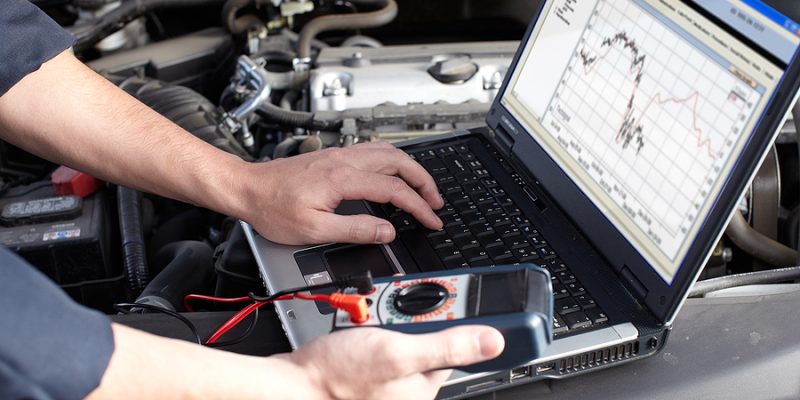
By The modern automobile is no longer a purely mechanical machine. It has evolved into a sophisticated mobile computer network, featuring dozens of Electronic Control Units (ECUs) that monitor everything from exhaust emissions to tire pressure. While the days of tuning a carburetor by ear are largely gone, they have been replaced by a much more precise and efficient method of vehicle maintenance: automotive diagnostics. For the contemporary car owner, leveraging diagnostic technology is the most effective way to ensure vehicle longevity, safety, and fuel efficiency.
Early problem detection through diagnostic testing is the proactive equivalent of a medical checkup for your car. Instead of waiting for a catastrophic mechanical failure to occur on a busy highway, diagnostic tools allow technicians to peer into the internal health of the vehicle’s systems and identify microscopic irregularities before they manifest as expensive repairs. Understanding the depth and capability of these systems is essential for anyone looking to protect one of their most significant financial investments.
The Evolution of the On-Board Diagnostics System
The foundation of modern automotive troubleshooting is the On-Board Diagnostics (OBD) system. In the United States, the federal government mandated the implementation of the OBD-II standard for all light-duty vehicles starting in 1996. This universal interface allowed mechanics to use a single type of scanner to access the data streams of any vehicle, regardless of the manufacturer.
When a sensor within the engine, transmission, or braking system detects a reading that falls outside of its programmed parameters, the computer logs a Diagnostic Trouble Code (DTC). This code acts as a digital fingerprint, pointing the technician toward the specific circuit or component that is malfunctioning. While a “Check Engine” light informs the driver that a problem exists, the diagnostic scan reveals the nature of that problem, providing a roadmap for an efficient and accurate repair.
Precision Over Guesswork: The Economic Advantage
One of the most significant benefits of early diagnostic detection is the elimination of the “parts cannon” approach to repairs. In the past, if an engine was idling roughly, a mechanic might replace the spark plugs, then the wires, then the fuel filter, hoping to eventually stumble upon the solution. This trial-and-error method is both time-consuming and prohibitively expensive for the consumer.
Diagnostic testing provides a high level of precision. By analyzing live data—such as fuel trim, oxygen sensor voltage, and ignition timing—a technician can isolate the root cause of an issue within minutes. For example, a rough idle might be caused by a vacuum leak that is invisible to the naked eye but obvious when looking at air intake data on a scanner. By identifying the exact failed component early, the owner saves money on unnecessary parts and labor.
Enhancing Fuel Efficiency and Environmental Stewardship
Automotive diagnostics play a critical role in maintaining a vehicle’s fuel economy. Many engine problems that go unnoticed by the driver can significantly increase fuel consumption. A faulty mass airflow sensor or a sticking thermostat might not immediately cause the car to stall, but it can force the engine to run “rich,” meaning it burns more fuel than necessary.
Early detection of these imbalances ensures that the engine operates at peak thermal efficiency. This not only keeps more money in the driver’s pocket at the gas pump but also reduces the vehicle’s carbon footprint. Furthermore, diagnostics monitor the health of the catalytic converter and the Evaporative Emission (EVAP) system. Detecting a small leak in the fuel vapor system early prevents harmful hydrocarbons from escaping into the atmosphere and ensures the vehicle will pass mandatory state emissions inspections.
Protecting the Power Train: Engine and Transmission Longevity
The engine and transmission are the most expensive components of any vehicle. Modern diagnostic systems are designed to protect these assets by monitoring internal pressures and temperatures with extreme accuracy.
-
Transmission Health: Diagnostic tools can monitor the slip rate of the torque converter and the pressure within the transmission fluid lines. Detecting a slight drop in pressure early can lead to a simple solenoid replacement rather than a multi-thousand-dollar transmission rebuild later.
-
Misfire Detection: The OBD-II system can detect a single misfire in a cylinder that the driver might not even feel. Constant misfires allow unburned fuel to enter the exhaust system, which can overheat and melt the precious metals inside the catalytic converter.
-
Cooling System Monitoring: High-resolution sensors can detect a failing electric cooling fan or a sluggish water pump long before the temperature gauge on the dashboard reaches the “red” zone, preventing a warped cylinder head or a cracked engine block.
Safety Systems and Occupant Protection
While much of the focus of diagnostics is on the engine, the technology is equally vital for the vehicle’s safety systems. The Anti-lock Braking System (ABS), Electronic Stability Control (ESC), and Supplemental Restraint System (SRS)—commonly known as the airbag system—all rely on constant self-diagnostics.
If a wheel speed sensor becomes covered in road debris or a wire in the airbag clockspring becomes brittle, the system will immediately disable the affected safety feature and alert the driver. Routine diagnostic scans can check the readiness of these systems even when no warning light is present. Knowing that your emergency braking and passenger protection systems are fully operational provides a level of psychological security that is invaluable, particularly for families and long-distance travelers.
Resale Value and Vehicle History Documentation
For those who plan to sell or trade in their vehicle in the future, a documented history of diagnostic health can significantly boost resale value. A car that has been regularly scanned and maintained shows that the owner was proactive rather than reactive.
In the used car market, savvy buyers often bring their own diagnostic scanners to check for “pending” codes or to see if the “monitors” have been recently reset—a common tactic used to hide problems just long enough to sell the car. By maintaining a clean bill of health through regular diagnostics, a seller can prove the integrity of their vehicle’s electronic and mechanical systems, justifying a higher asking price.
The Role of Telematics and Remote Diagnostics
The future of automotive diagnostics lies in telematics, where the vehicle communicates its health data directly to the manufacturer or the owner’s smartphone in real time. Many modern vehicles can now send an email or a push notification to the driver if a critical system requires attention.
Remote diagnostics allow for an even more streamlined maintenance experience. In some cases, a dealership service department can look at a vehicle’s data while it is still sitting in the owner’s driveway. They can determine if the car is safe to drive to the shop or if it requires a tow truck. This level of connectivity ensures that “early detection” happens the very second a sensor detects an anomaly, further closing the window of opportunity for a minor issue to become a major failure.
Conclusion
The complexity of modern vehicles is often viewed with skepticism, but it is this very complexity that allows for unprecedented levels of reliability through automotive diagnostics. By embracing diagnostic technology, car owners move from a position of uncertainty to one of empowerment. Early problem detection saves money, protects the environment, ensures the safety of all occupants, and extends the functional life of the vehicle. In a world where the cost of living continues to rise, the ability to avoid catastrophic repair bills through a simple, data-driven scan is not just a convenience—it is a financial and practical necessity.
Frequently Asked Questions
Can I perform automotive diagnostics at home, or do I need a professional?
While basic OBD-II scanners are available to consumers and can read general trouble codes, professional-grade diagnostic equipment is significantly more powerful. Professional tools can access manufacturer-specific subsystems like the Body Control Module (BCM) or the Climate Control system and can perform “active tests,” such as manually cycling a fuel pump or an ABS motor, which consumer-grade scanners generally cannot do.
Does a diagnostic scan tell the mechanic exactly which part to replace?
Not exactly. A diagnostic scan provides a “code” which indicates a circuit or system that is out of range. For example, a code for a “Lean Exhaust” doesn’t necessarily mean the oxygen sensor is bad; it could mean there is a vacuum leak, a clogged fuel injector, or a failing fuel pump. The scan is the starting point that tells the mechanic where to begin their physical inspection and testing.
How often should I have a diagnostic scan performed if there are no warning lights?
It is a good practice to have a full system scan performed at least once a year or during your regular oil change interval. Many “pending” codes can exist in the computer’s memory without triggering a dashboard light. Finding these early can prevent a surprise breakdown.
Will a diagnostic scan clear the “Check Engine” light permanently?
A scanner can clear the code and turn off the light, but if the underlying mechanical or electrical problem is not fixed, the computer will eventually detect the fault again and the light will return. In some cases, it may take several days of driving for the computer to complete its “readiness monitors” and re-illuminate the light.
Are diagnostic trouble codes the same for every car?
Standard “P0” codes (Generic Powertrain) are the same across all brands. However, manufacturers also use “P1” codes and other manufacturer-specific codes (B-codes for Body, C-codes for Chassis, and U-codes for Network) that are unique to their vehicles. This is why having a high-quality scanner with updated manufacturer software is important.
Can a low battery trigger false diagnostic trouble codes?
Yes, modern vehicle computers are very sensitive to voltage. If a battery is weak or an alternator is failing, the drop in voltage can cause various sensors to send erratic signals, leading to a “ghost” of multiple unrelated trouble codes. A professional diagnostic session usually begins with a battery and charging system test for this reason.
Is there a difference between a “code pull” and a “diagnostic fee”?
Yes. Many auto parts stores offer a “free code pull,” which simply tells you what the code is. A professional diagnostic fee covers the technician’s time to use advanced equipment and their expertise to verify exactly why that code was triggered through physical testing, ensuring the correct repair is made the first time.